• Instagram
  • Facebook
1855 613 4773
Entrepreneur en Béton | Les Services de Béton Universel Ltée (Entrepôt / Warehouse)
  • Acceuil
  • Construction de dalle de béton
  • Réfection de stationnement
  • Réparation de béton
  • Sciage de béton / Forage de béton
  • Préparation des Surfaces en Béton
  • Décontamination de pyrite
  • Réalisations
  • Entrepreneur en Béton – Contact
  • Search
  • Menu Menu
English

Préparation des surfaces en béton

1855 613 4773
Demande D’information

Préparation de Surface de Béton Montréal – Experts en Traitement Professionnel

Votre Partenaire de Confiance pour la Préparation de Surface de Béton à Montréal

Vous recherchez des services professionnels de préparation de surface de béton à Montréal ? Notre équipe d’experts, située au 1801 Rue Chicoine #6, Vaudreuil-Dorion QC, J7V 8P2, Canada, offre des solutions complètes pour tous vos projets de réparation de béton.

Pourquoi la Préparation de Surface de Béton est-elle Cruciale ?

La préparation de surface de béton est l’étape fondamentale qui détermine la durabilité et la qualité de vos revêtements. Une surface mal préparée peut entraîner des problèmes coûteux tels que :

  • Décollement prématuré des revêtements
  • Fissures et détérioration accélérée
  • Perte d’adhérence des matériaux appliqués
  • Coûts de réparation élevés à long terme

Nos Services de Préparation de Surface de Béton

Évaluation et Diagnostic Professionnel

Notre équipe commence chaque projet par une évaluation complète de votre surface de béton. Nous analysons :

  • L’état général de la surface
  • La présence de fissures ou de défauts
  • Le niveau d’humidité et de contamination
  • La compatibilité avec les futurs revêtements

Techniques de Préparation Avancées

Nous utilisons les méthodes les plus efficaces pour préparer vos surfaces :

  • Grenaillage : Élimination des contaminants et création d’un profil d’adhérence optimal
  • Ponçage diamant : Lissage et nivellement des surfaces irrégulières
  • Décapage chimique : Retrait des anciennes peintures et revêtements
  • Réparation des fissures : Colmatage professionnel des défauts structurels

Avantages de Choisir Notre Équipe

Expertise Locale Montréalaise

Basés au 1801 Rue Chicoine #6, Vaudreuil-Dorion QC, J7V 8P2 nous comprenons parfaitement les défis spécifiques du climat montréalais et ses effets sur le béton.

Équipement de Pointe

  • Machines de grenaillage haute performance
  • Outils de ponçage diamant professionnels
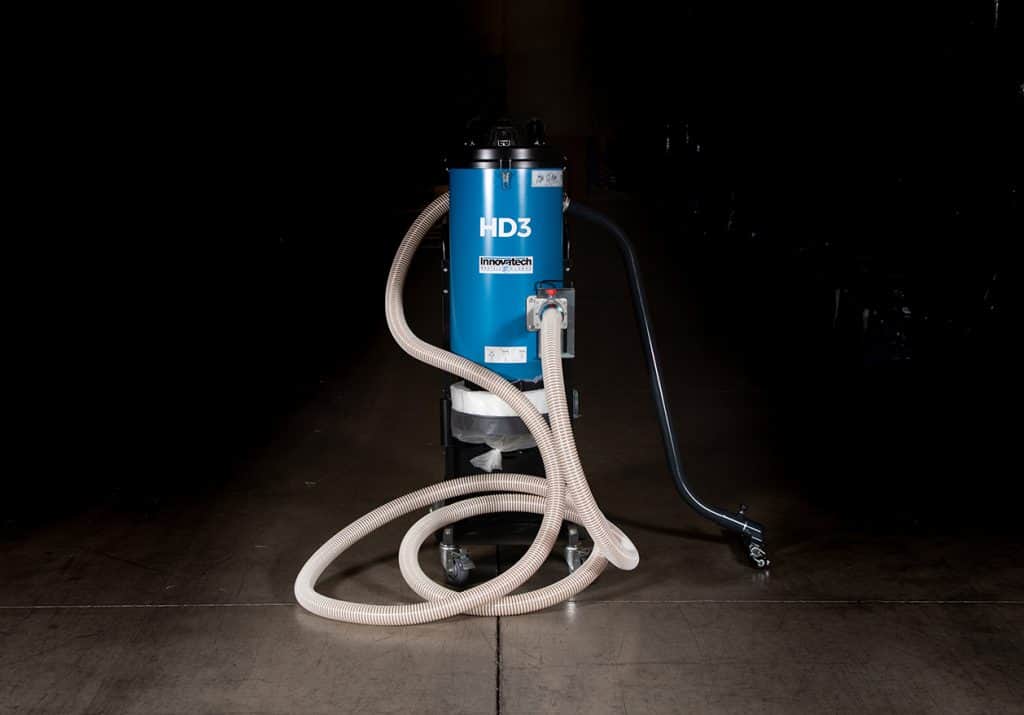
  • Systèmes d’aspiration pour un environnement propre
  • Équipements de mesure de précision

Garantie de Qualité

  • Respect des normes industrielles les plus strictes
  • Matériaux de première qualité
  • Équipe certifiée et expérimentée
  • Suivi post-intervention

Secteurs d’Application

Nos services de préparation de surface de béton s’adaptent à tous types de projets :

Résidentiel

  • Sous-sols et garages
  • Terrasses et balcons
  • Planchers de maison

Commercial

  • Entrepôts et centres de distribution
  • Magasins et centres commerciaux
  • Bureaux et espaces corporatifs

Industriel

  • Usines et installations manufacturières
  • Hangars et espaces de stockage
  • Zones de production

Processus de Travail Optimisé

1. Consultation Gratuite

Contactez notre équipe au 1801 Rue Chicoine #6, Vaudreuil-Dorion QC, J7V 8P2, Canada, pour une évaluation sans engagement.

2. Devis Personnalisé

Nous établissons un plan de travail détaillé adapté à vos besoins spécifiques et votre budget.

3. Préparation du Site

Protection des zones adjacentes et mise en place des équipements de sécurité.

4. Exécution Professionnelle

Application des techniques de préparation les plus appropriées à votre projet.

5. Contrôle Qualité

Vérification complète de la surface préparée selon les standards industriels.

Pourquoi Nous Choisir ?

  • 7 + années d’expérience dans la préparation de surface de béton
  • Équipe certifiée et formée aux dernières techniques
  • Respect des délais et des budgets convenus
  • Service client exceptionnel du début à la fin du projet
  • Localisation stratégique au cœur de Montréal

Technologies et Innovations

Nous investissons continuellement dans les dernières technologies pour offrir des résultats supérieurs :

  • Systèmes de grenaillage sans poussière
  • Équipements de mesure laser pour la planéité
  • Produits écologiques et respectueux de l’environnement
  • Techniques de préparation adaptées aux nouvelles générations de revêtements

Obtenez Votre Devis Gratuit Aujourd’hui

Transformez vos surfaces de béton avec l’expertise de nos professionnels. Contactez-nous dès maintenant pour une consultation gratuite et découvrez pourquoi nous sommes le choix numéro un pour la préparation de surface de béton à Montréal.

Adresse : 1801 Rue Chicoine #6, Vaudreuil-Dorion QC, J7V 8P2, Canada,

Zones de Service : Montréal et région métropolitaine


Faites confiance à notre expertise pour préparer parfaitement vos surfaces de béton. Votre projet mérite la qualité professionnelle que nous offrons depuis 7 ans dans la région de Montréal.
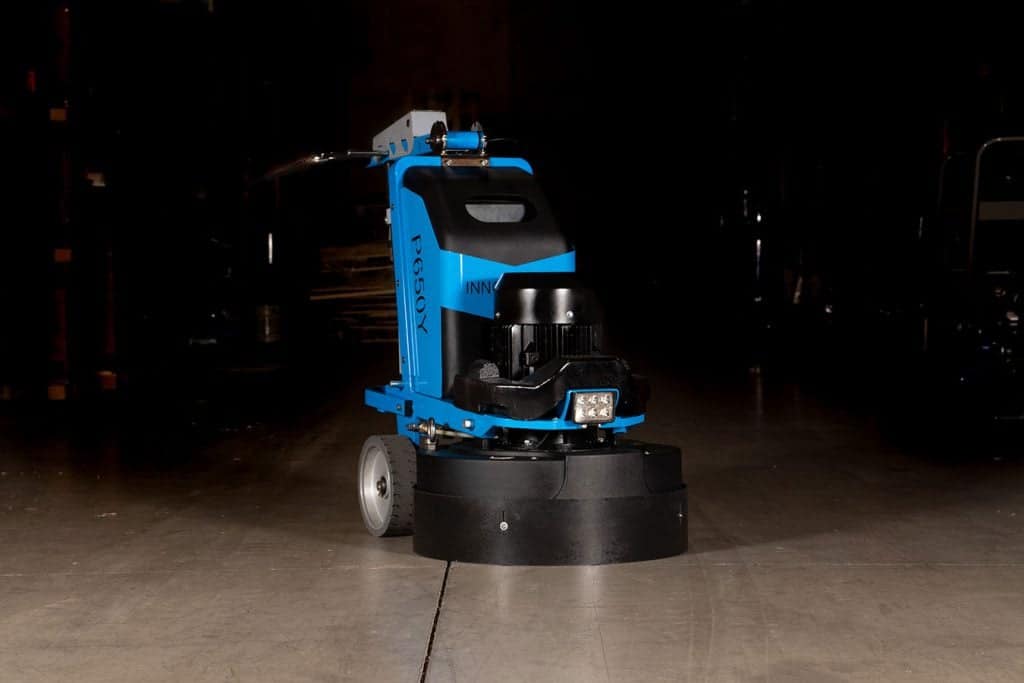
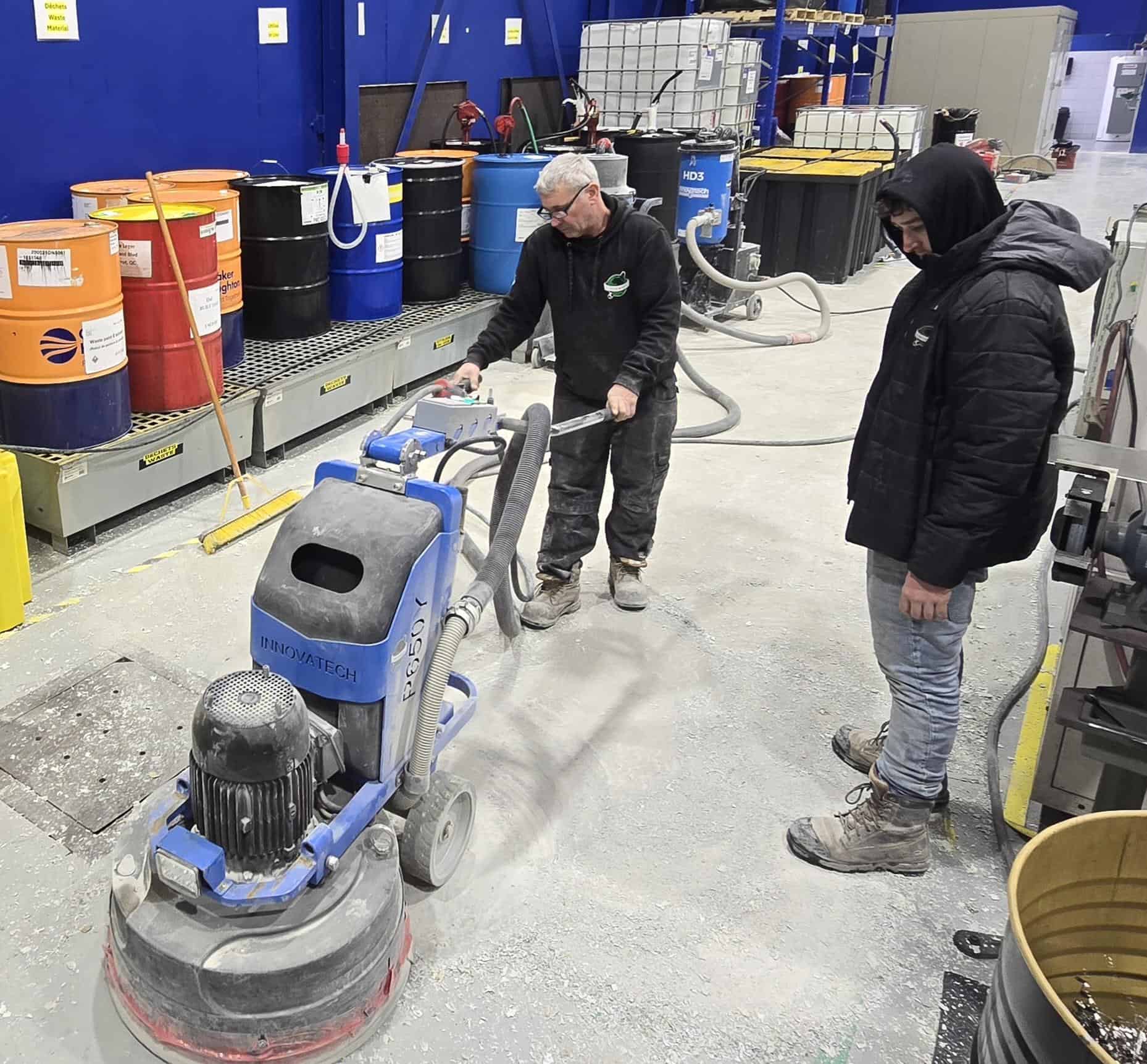
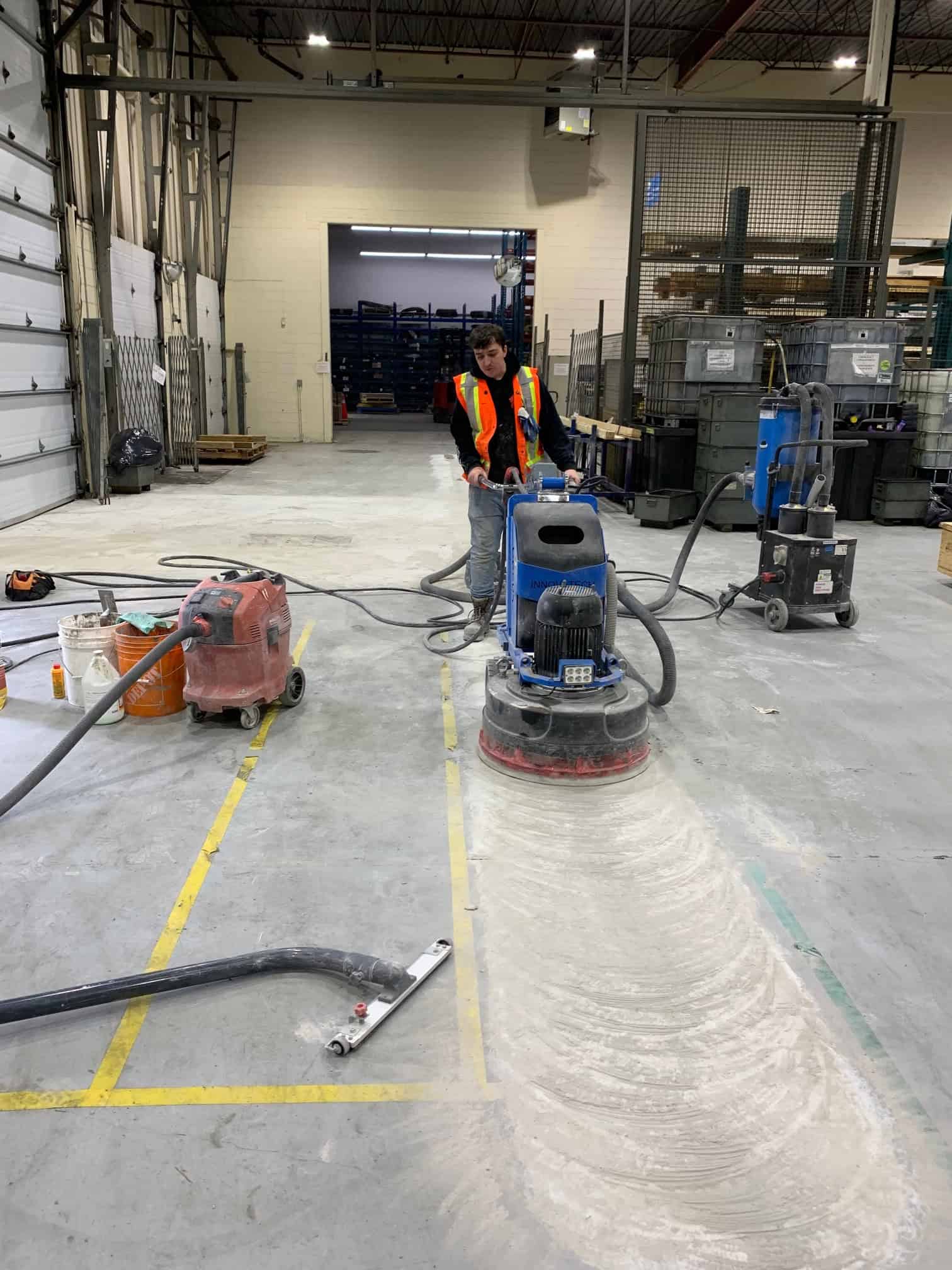
CONCRETE GRINDING.
CONCRETE GRINDING MONTREAL
Industrial Concrete Slab Grinding: Complete Guide to Professional Floor Preparation Industrial concrete slab grinding has become an essential process for businesses looking to achieve smooth, level, and durable concrete surfaces. Whether you're preparing floors for new coatings, removing imperfections, or creating specific surface profiles, understanding the intricacies of this specialized technique is crucial for successful project outcomes. What is Industrial Concrete Slab Grinding? Industrial concrete slab grinding is a mechanical process that uses specialized diamond grinding equipment to remove surface irregularities, coatings, and contaminants from concrete floors. This technique involves using rotating diamond-embedded discs or segments to systematically abrade the concrete surface, creating a uniform and properly prepared substrate. The process serves multiple purposes in industrial settings: Surface leveling and smoothing Removal of existing coatings or sealers Creation of specific surface profiles for adhesion Elimination of surface defects and imperfections Preparation for new flooring systems When Do You Need Industrial Concrete Slab Grinding? Surface Preparation Requirements Industrial concrete slab grinding becomes necessary in several scenarios: New Construction Projects: Removing construction debris and surface contamination Eliminating high spots and ridges from concrete pours Creating proper surface profiles for coating adhesion Achieving specified flatness tolerances Renovation and Maintenance: Removing old paint, epoxy, or other floor coatings Correcting uneven or damaged concrete surfaces Preparing floors for new industrial coatings Addressing surface wear and deterioration Industry-Specific Applications Different industries have unique requirements for industrial concrete slab grinding: Manufacturing Facilities: Heavy machinery requires perfectly level surfaces Chemical resistance preparations Anti-slip surface creation Warehouses and Distribution Centers: High-traffic area preparation Forklift-resistant surface creation Dust reduction requirements Food Processing Plants: Sanitary surface preparation Seamless floor requirements Chemical-resistant coating preparation The Industrial Concrete Slab Grinding Process Equipment and Tools Professional industrial concrete slab grinding requires specialized equipment: Primary Grinding Equipment: Walk-behind concrete grinders (7-27 HP) Ride-on grinding machines (25-75 HP) Planetary grinding systems Edge grinders for perimeter work Diamond Tooling: Metal-bonded diamond segments for aggressive grinding Resin-bonded diamonds for fine finishing Various grit sizes (16-3000 grit) Specialized profiles for different applications Support Equipment: Industrial dust collection systems Surface preparation tools Measuring and leveling instruments Safety equipment and protective gear Step-by-Step Process Phase 1: Assessment and Preparation Before beginning industrial concrete slab grinding, thorough preparation is essential: Surface Inspection: Identify high and low spots Locate existing coatings or contaminants Check for structural issues or cracks Determine required surface profile Area Preparation: Remove all furniture and equipment Clean the surface of debris and loose materials Protect adjacent areas and equipment Ensure proper ventilation Phase 2: Initial Grinding The actual industrial concrete slab grinding process begins with: Coarse Grinding: Use aggressive diamond tooling (16-40 grit) Remove major imperfections and coatings Establish initial surface profile Work in systematic patterns Progressive Refinement: Gradually move to finer grits (80-120 grit) Smooth out grinding marks Achieve desired surface profile Maintain consistent overlap patterns Phase 3: Final Processing The completion of industrial concrete slab grinding involves: Fine Grinding: Use fine diamond tooling (200-400 grit) Remove all visible grinding marks Achieve specified smoothness Prepare for coating application Quality Control: Measure surface flatness Check for remaining imperfections Verify surface profile requirements Document completion standards Benefits of Professional Industrial Concrete Slab Grinding Enhanced Durability Properly executed industrial concrete slab grinding provides numerous advantages: Improved Surface Integrity: Eliminates weak surface layers Creates uniform substrate conditions Reduces potential failure points Extends overall floor lifespan Better Coating Adhesion: Optimal surface profile for bonding Removal of contamination barriers Consistent surface energy Reduced coating failure risk Cost-Effectiveness Industrial concrete slab grinding offers significant economic benefits: Long-term Savings: Reduces need for frequent repairs Minimizes coating system failures Decreases maintenance requirements Extends service intervals Improved Productivity: Creates safer working surfaces Reduces equipment wear Minimizes downtime Enhances operational efficiency Choosing the Right Grinding Approach Surface Profile Requirements Different applications require specific approaches to industrial concrete slab grinding: Light Grinding (CSP 1-2): Minimal surface preparation Removal of laitance only Suitable for penetrating sealers Maintains smooth finish Medium Grinding (CSP 3-4): Moderate surface preparation Standard coating applications Balanced adhesion and smoothness Most common requirement Aggressive Grinding (CSP 5-6): Heavy-duty applications Maximum coating adhesion High-stress environments Specialized coating systems Environmental Considerations Modern industrial concrete slab grinding must address environmental concerns: Dust Control: HEPA filtration systems Wet grinding techniques Containment procedures Air quality monitoring Waste Management: Proper disposal of grinding residue Recycling of diamond tooling Contaminated material handling Environmental compliance Quality Assurance and Standards Testing and Verification Professional industrial concrete slab grinding includes comprehensive quality control: Surface Profile Testing: Replica tape measurements Digital profile gauges Visual comparison standards Documentation requirements Flatness Verification: Straightedge measurements Laser level surveys Statistical analysis Tolerance compliance Industry Standards Industrial concrete slab grinding must meet various industry standards: ICRI Guidelines: Surface preparation standards Profile classification systems Quality control procedures Best practice recommendations ASTM Standards: Testing methodologies Material specifications Performance criteria Safety requirements Maintenance and Long-term Care Post-Grinding Maintenance After industrial concrete slab grinding, proper maintenance ensures optimal performance: Immediate Care: Thorough cleaning of grinding residue Surface moisture management Protection from contamination Preparation for coating application Ongoing Maintenance: Regular surface inspections Prompt repair of damage Proper cleaning procedures Periodic re-evaluation Performance Monitoring Long-term success of industrial concrete slab grinding requires ongoing assessment: Regular Inspections: Surface condition monitoring Coating system evaluation Wear pattern analysis Preventive maintenance planning Conclusion Industrial concrete slab grinding represents a critical investment in the long-term performance and durability of industrial concrete floors. When executed by experienced professionals using proper equipment and techniques, this process creates superior surfaces that enhance safety, productivity, and operational efficiency. The success of any industrial concrete slab grinding project depends on thorough planning, proper equipment selection, skilled execution, and adherence to industry standards. By understanding the complexities and requirements of this specialized process, facility managers and contractors can make informed decisions that deliver lasting value and performance. Whether preparing surfaces for new coatings, correcting existing problems, or maintaining critical industrial floors, professional industrial concrete slab grinding provides the foundation for successful, long-lasting flooring systems that meet the demanding requirements of modern industrial environments.
The Complete Guide to Concrete Grinding: Everything You Need to Know Concrete grinding is an essential process in construction and renovation projects that transforms rough, uneven, or damaged concrete surfaces into smooth, polished finishes. Whether you're dealing with a new concrete pour that needs leveling or an old surface requiring restoration, understanding the fundamentals of concrete grinding can help you achieve professional results. What is Concrete Grinding? Concrete grinding is a mechanical process that uses specialized equipment to remove surface imperfections, level uneven areas, and create smooth finishes on concrete floors, walls, and other surfaces. This technique employs diamond-embedded grinding wheels or discs that gradually wear away the concrete surface to achieve the desired texture and appearance. The process is commonly used in: Industrial facilities Retail spaces Warehouses Residential garages Commercial buildings Decorative concrete applications Understanding the Concrete Grinding Process The concrete grinding process involves several systematic steps that ensure optimal results and surface quality. Here's a detailed breakdown of how professionals approach this specialized technique: 1. Surface Assessment and Preparation Before beginning any grinding work, contractors thoroughly evaluate the concrete surface to: Identify high and low spots Check for cracks, holes, or structural damage Determine the appropriate grinding method Select the correct diamond tooling 2. Equipment Setup and Safety Measures Professional concrete grinding requires specialized machinery and safety protocols: Grinders: Walk-behind units, ride-on machines, or handheld grinders Diamond tooling: Various grit levels for different stages Dust collection systems: To maintain air quality and visibility Safety equipment: Protective gear for operators 3. Initial Grinding Phase The concrete grinding process typically begins with coarse-grit diamonds to: Remove surface irregularities Level uneven areas Eliminate coating residues or adhesives Create the initial smooth surface 4. Progressive Refinement Subsequent passes use increasingly finer diamond grits to: Smooth out scratches from previous steps Achieve the desired surface texture Prepare for polishing (if required) Create uniform appearance across the entire surface Types of Concrete Grinding Applications Surface Leveling One of the most common applications involves correcting uneven concrete surfaces caused by: Settlement issues Poor initial installation Wear patterns from heavy traffic Expansion joint irregularities Coating Removal Concrete grinding effectively removes: Old paint and epoxy coatings Adhesive residues Stains and discoloration Surface contaminants Decorative Preparation For decorative concrete projects, grinding prepares surfaces for: Polished concrete finishes Staining applications Overlay installations Texture creation Benefits of Professional Concrete Grinding Enhanced Durability Properly ground concrete surfaces offer: Improved resistance to wear and tear Better adhesion for new coatings Reduced maintenance requirements Extended surface lifespan Aesthetic Improvements The concrete grinding process delivers: Uniform surface appearance Elimination of unsightly imperfections Preparation for decorative treatments Professional-quality finishes Cost-Effectiveness Compared to complete concrete replacement, grinding provides: Significant cost savings Minimal downtime Reduced waste disposal Faster project completion Equipment and Tools Required Primary Grinding Equipment Walk-behind grinders: Ideal for medium-sized areas Ride-on grinders: Efficient for large commercial spaces Handheld grinders: Perfect for edges and detailed work Planetary grinders: Excellent for aggressive material removal Diamond Tooling Options Metal-bonded diamonds: For hard concrete surfaces Resin-bonded diamonds: For softer concrete and fine finishing Hybrid bonds: Versatile options for various concrete types Support Equipment Dust collection systems: Essential for clean operation Water supply systems: For wet grinding applications Edge grinders: For perimeter and detail work Safety Considerations and Best Practices Personal Protective Equipment Essential safety gear includes: Respiratory protection against silica dust Eye and hearing protection Non-slip safety footwear High-visibility clothing Environmental Controls Proper dust management through: HEPA-filtered vacuum systems Wet grinding techniques when appropriate Containment barriers Regular air quality monitoring Operator Training Successful concrete grinding requires: Understanding of equipment operation Knowledge of diamond tool selection Awareness of safety protocols Experience with different concrete types Common Challenges and Solutions Uneven Grinding Results Problem: Inconsistent surface texture or appearance Solutions: Maintain consistent machine speed and pressure Use proper diamond tool selection Ensure adequate operator training Regular equipment maintenance Excessive Dust Generation Problem: Poor visibility and air quality concerns Solutions: Implement effective dust collection systems Consider wet grinding methods Use proper containment measures Regular filter maintenance Diamond Tool Wear Problem: Premature tool degradation Solutions: Match tool hardness to concrete type Maintain proper grinding parameters Regular tool inspection and rotation Quality tool selection Maintenance and Care Equipment Maintenance Regular maintenance ensures optimal performance: Daily cleaning and inspection Proper storage procedures Scheduled component replacement Professional servicing when needed Surface Care Post-Grinding Maintaining ground concrete surfaces involves: Regular cleaning protocols Appropriate sealing when necessary Prompt repair of any damage Periodic re-grinding if required Conclusion The concrete grinding process represents a sophisticated approach to surface preparation and restoration that delivers exceptional results when performed correctly. By understanding the fundamentals of equipment selection, proper technique, and safety protocols, contractors and property owners can achieve professional-quality concrete surfaces that enhance both functionality and appearance. Whether you're preparing surfaces for new coatings, creating decorative finishes, or simply leveling uneven concrete, investing in proper concrete grinding techniques will provide long-lasting, cost-effective solutions for your project needs. Remember that while concrete grinding can be performed as a DIY project for small areas, larger or more complex applications typically benefit from professional expertise to ensure optimal results and safety compliance.

Demande D’information

LLMs
© Copyright - Les Services de Béton Universel Ltée (Entrepôt / Warehouse), 6 - 1801, Rue Chicoine. Vaudreuil-Dorion QC, J7V 8P2, T: 1855 613 4773
  • Instagram
  • Facebook
Scroll to top